Endosteal implants in Illinois are the most common type of dental implant used to replace missing teeth. They act like an artificial tooth root anchored into the jawbone to support a crown, bridge, or denture. This post explains how endosteal implants work, the placement steps, who makes a good candidate, benefits and risks, recovery and care, helpful technologies, and how Grand Dental Implant Centers can help you explore implant options.
How Endosteal Implants Work
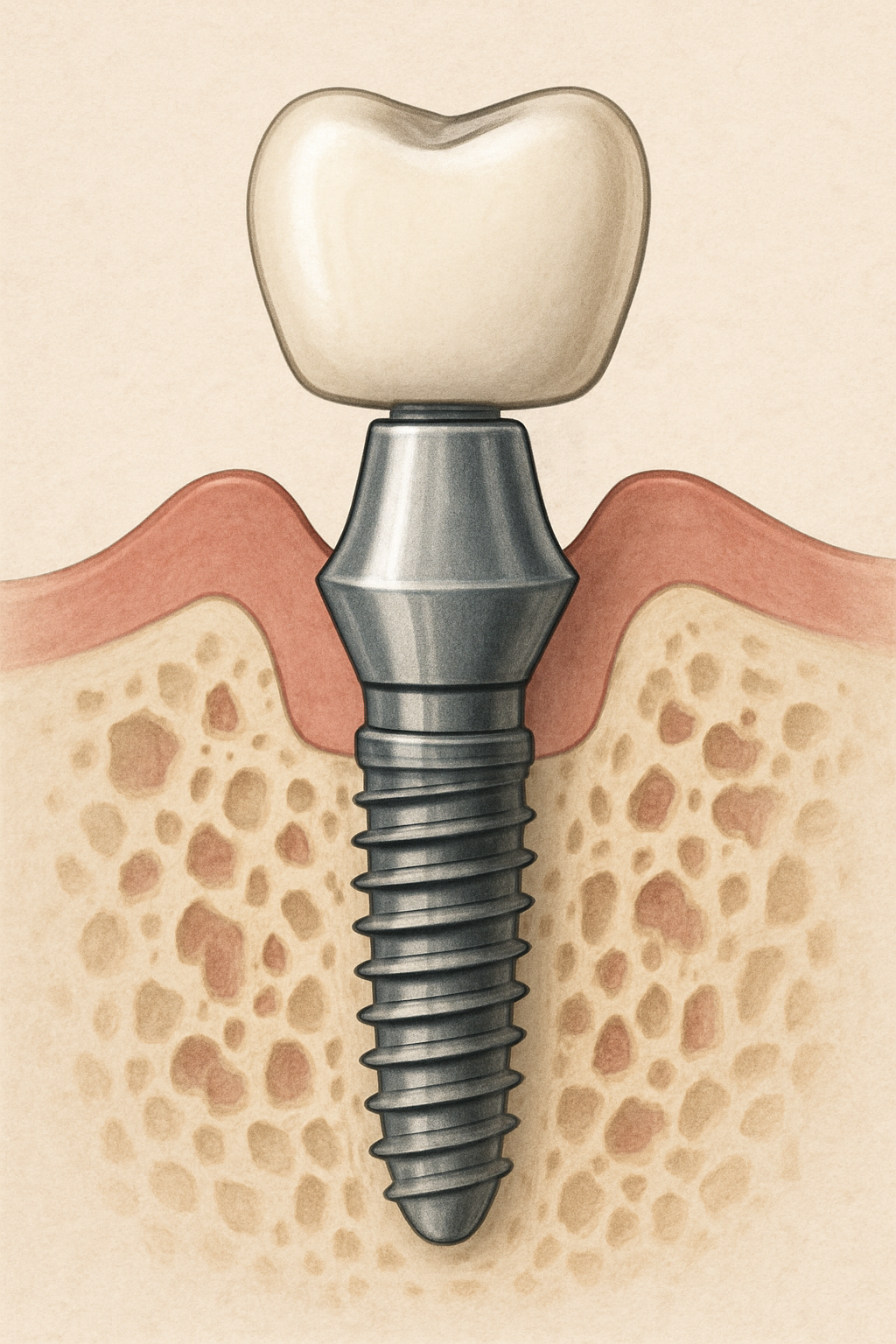
Endosteal implants have three main parts: the implant screw (the part placed into bone), the abutment (connects the screw to the visible tooth), and the crown or prosthesis (the visible replacement tooth). After placement, the bone grows tightly around the implant in a process called osseointegration. When osseointegration succeeds, the implant becomes a stable foundation for chewing and speaking. A strong bone connection reduces the chance of loosening and gives long-term success.
The Endosteal Implant Placement Process
Initial exam and 3D imaging
The process starts with a dental exam and 3D CBCT scans to map your jawbone and nearby nerves. Digital planning uses these images to choose the right implant size and exact placement. Accurate mapping lowers risk and helps the team predict whether bone grafts or sinus lifts are needed before placing endosteal implants in Illinois.
Surgery and restoration
Surgery typically places the implant screw into the jaw under local anesthesia or IV sedation for comfort. After placement, there’s a healing period (often a few months) for osseointegration. Next the abutment is attached and a final crown or bridge is fitted. For full-arch cases, a temporary prosthesis may be used while healing continues. IV sedation options are available for patients who prefer to be relaxed during surgery.
Who Is a Good Candidate for Endosteal Implants?
Good candidates are in generally good health, committed to oral hygiene, and have enough jawbone to support implants. Common barriers include heavy smoking, uncontrolled diabetes, and low bone volume. Solutions include quitting smoking, managing medical conditions with your doctor, and procedures like bone grafting or sinus lifts to build sufficient bone for endosteal implants in Illinois.
Benefits and Risks of Endosteal Implants
Key benefits: improved chewing, clearer speech, natural appearance, and preservation of jawbone. Implants also avoid damaging nearby teeth, unlike some bridges. Risks include infection, implant failure, nerve irritation, and sinus issues for upper implants. Clinicians reduce risks with thorough planning, sterile technique, precise placement, and careful follow-up care.
What to Expect During Recovery and Long-Term Care
Short-term recovery often involves swelling, mild pain controlled with medications, and a soft diet for a few days. Follow-up visits monitor healing. Long-term care includes daily brushing and flossing, avoiding hard habits, and regular dental checkups. Proper maintenance extends the life of your endosteal implants in Illinois.
Advanced Technology That Improves Endosteal Implant Outcomes
Modern tools raise success rates: CBCT 3D imaging for precise planning, intraoral scanners for accurate digital impressions, soft-tissue lasers to manage gum health, zirconia restorations for durable, natural-looking crowns, and in-house labs for faster, closely controlled prosthetic fabrication.
Why Choose Grand Dental Implant Centers for Endosteal Implants
Grand Dental Implant Centers offers implant-focused care across multiple Illinois locations, including Aurora, Lake Zurich, and Wilmington. Their teams include experienced clinicians like Dr. Cole Wells and Dr. Brandon Bice. The practice uses CBCT imaging, intraoral scanners, soft-tissue lasers, zirconia restorations, in-house labs, IV sedation, and financing to help make treatment comfortable and accessible.
Next Steps: Is an Endosteal Implant Right for You?
If you’re considering endosteal implants in Illinois, schedule a consultation for a personalized exam and treatment timeline. Contact Grand Dental Implant Centers to learn if implants are the right option and to get a clear plan for restoring your smile.