Dental tooth replacement options can feel overwhelming, but this post breaks the choices down clearly. You’ll get a quick comparison of common solutions, the pros and cons of each, and how to pick the right one for your needs. Read on to learn about implants, bridges, dentures, what an evaluation includes, how modern tech improves results, and the questions most patients ask.
Common dental tooth replacement options
Single dental implant (implant + crown)
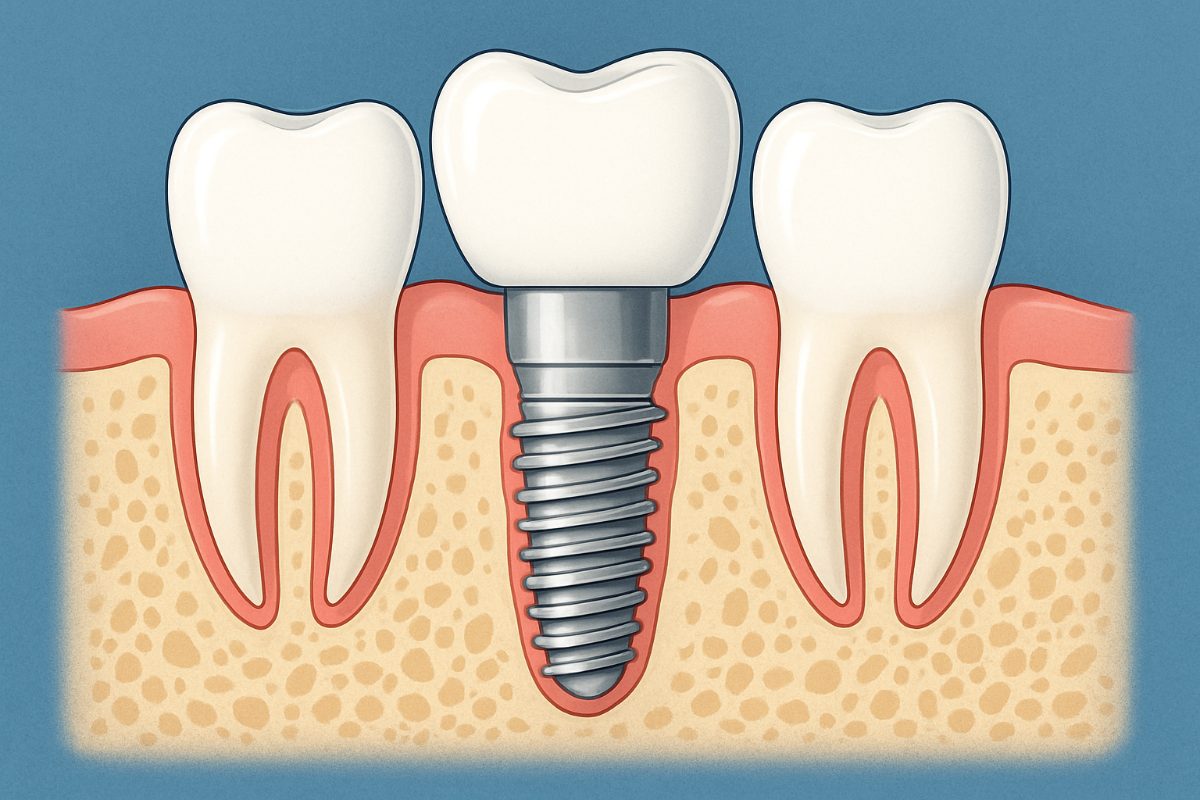
A single dental implant replaces one missing tooth with a titanium post in the jaw and a ceramic crown on top. Timeline is usually months from placement to final crown. Implants are very durable, preserve bone, and look natural. Main downsides are cost and the need for adequate bone.
Implant-supported bridge
Used when several adjacent teeth are missing. Instead of using natural teeth for support, implants hold a bridge. It’s stronger and kinder to nearby teeth than a traditional bridge, but costs more and needs good bone where implants go.
Full-arch implants (All‑on‑4 / All‑on‑X)
A full-arch solution replaces an entire upper or lower set of teeth on a few implants. Typical candidates have many missing or failing teeth. It restores chewing and appearance quickly with a fixed prosthesis, but it is a larger expense and may require more advanced planning.
Fixed dental bridge (non-implant)
A fixed bridge uses crowns on adjacent teeth to support a false tooth. It’s faster and can be less costly up front than implants, but healthy neighboring teeth must be prepared. Bridges can last many years but don’t stop bone loss where the tooth is missing.
Removable partial denture
A partial denture fills gaps for several missing teeth and clips onto remaining teeth. It’s affordable and easy to adjust. Downsides include less stability and comfort than fixed options and the need for periodic relines.
Complete (full) denture
Full dentures replace all teeth in one arch and can be made immediately after extractions or after healing. They are the most affordable full‑arch option but can feel less stable and do not prevent jawbone shrinkage without implant support.
How to choose the best dental tooth replacement options for you
Key factors to consider
Decide based on how many teeth are missing, jawbone health, overall medical history, budget, timeline, and how natural you want the result to look and feel. Younger, healthier patients with good bone often do well with implants; others may prefer removable solutions.
What an evaluation includes
A proper evaluation has a clinical exam, X-rays or a CBCT 3D scan, impressions or digital scans, and a clear treatment plan with costs and timelines. This helps match the right option to your needs. For more details on what to expect during your visit, check out our what an evaluation includes page.
How modern technology affects outcomes
CBCT scans, intraoral scanners, zirconia restorations, soft‑tissue lasers, and in‑house labs lead to more accurate planning, better fit, faster restorations, and improved long‑term success. These tools reduce surprises and speed up the process.
Common patient questions and risks
Longevity and success rates
Implants often last decades with proper care; bridges and dentures may need replacement every 5–15 years. Success depends on oral hygiene, smoking, health conditions, and regular dental visits.
Pain, healing time, and sedation options
Most procedures cause mild to moderate soreness for a few days. Healing for implants can take weeks to months. Options like IV sedation are available for comfort during surgery.
Maintenance and cost/insurance basics
Daily brushing, flossing, and routine checkups keep replacements healthy. Insurance may cover parts of bridges or dentures; implants are often only partially covered. Many practices offer financing plans.
About Grand Dental Implant Centers
Grand Dental Implant Centers focuses on implant dentistry across Illinois locations such as Aurora, Lake Zurich, and Wilmington. The team uses CBCT imaging, intraoral scanning, zirconia restorations, soft‑tissue lasers, and in‑house labs to offer single-tooth and full-arch implant solutions.
Next steps — scheduling a consultation
Bring any dental records, X-rays, a list of medications, and your questions to a consult. A clinician will review your exam and scans, explain which dental tooth replacement options fit you best, and provide a treatment plan and cost estimate. Call or request a visit to get started.