Implant dental steps guide readers through each stage of getting dental implants so you know what to expect from the first visit to the final tooth. This article explains each step clearly — from consultation and imaging to surgery, healing, and the final restoration — so you can plan time, costs, and questions for your dentist.
Overview of the implant dental steps
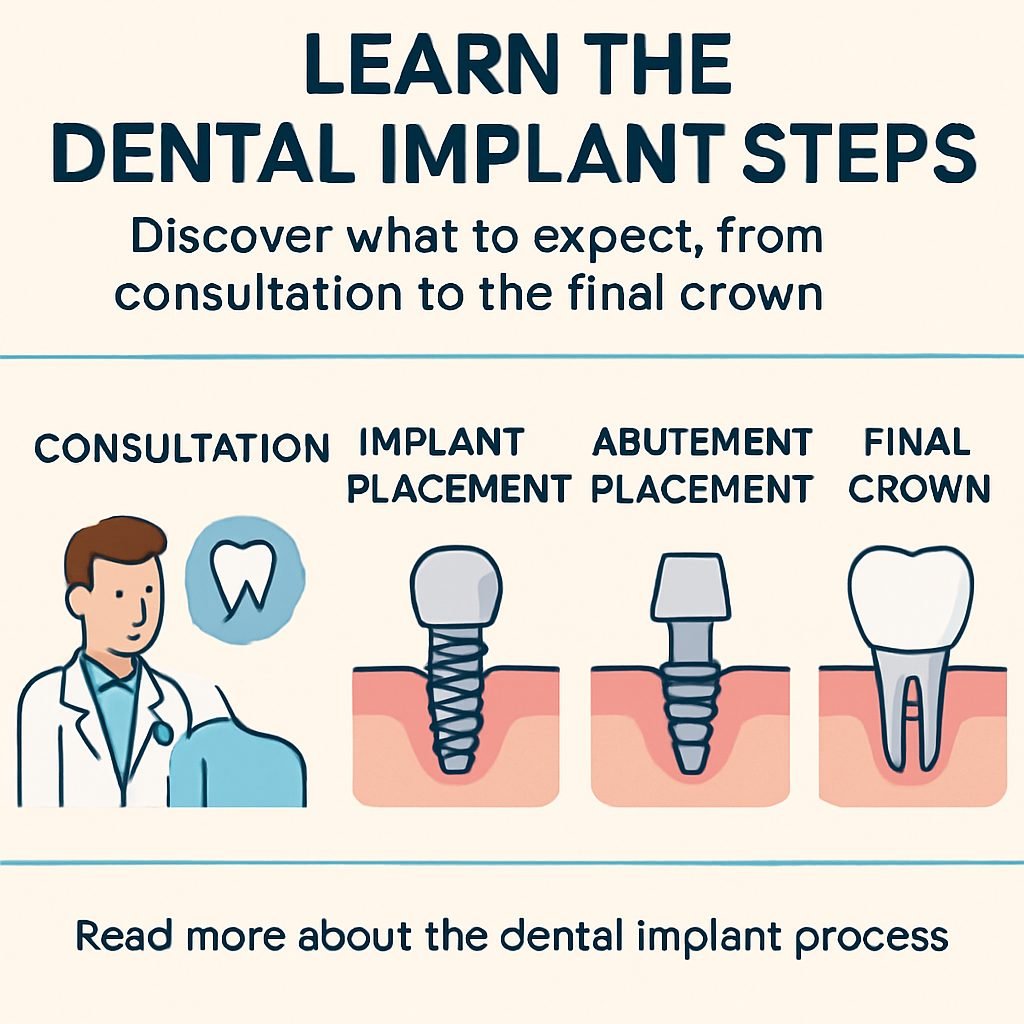
The implant dental steps in Aurora, IL typically follow a set path: consultation and 3D imaging, any necessary extractions or grafts, surgical implant placement, months of healing (osseointegration), and delivery of the final crown, bridge, or full-arch prosthetic. Each stage matters to create a stable, lasting result and lower the risk of complications.
Initial consultation and diagnosis
Medical and dental history review
Your dentist reviews health conditions, medications, and prior dental work. Conditions like diabetes or smoking can affect healing, so the team discusses risks and steps to improve success.
3D imaging and treatment planning (CBCT)
A cone-beam CT scan maps your jawbone in 3D. CBCT guides precise implant placement, shows bone volume, and reveals nearby nerves or sinuses to avoid during surgery.
Discussing options and creating a plan
Options include a single implant, multiple implants, or full-arch restorations. The plan covers timelines, temporary teeth, and whether immediate vs. delayed protocols fit your case.
Preparation before implant placement
Tooth extraction and site cleanup
If a tooth must be removed, the socket is cleaned and sometimes grafted to preserve bone. A healed, healthy site increases the chance of implant success.
Bone grafting and sinus lifts
When bone volume is low, Bone grafting or sinus lifts rebuild support. Healing can take several months before placing the implant, depending on graft size and your health.
Health optimization and sedation decisions
Control medical issues, stop smoking if advised, and choose sedation if needed. Options include oral or IV sedation to keep you comfortable during longer procedures.
Surgical implant placement
What happens during surgery
Under anesthesia, the dentist places a titanium implant into the jawbone, then covers it with a healing cap or temporary. The procedure often takes 30–90 minutes per implant depending on complexity.
Immediate vs. delayed implant protocols
Immediate protocols place a temporary tooth the same day when primary stability allows. Delayed protocols wait weeks to months to permit healing for safer long-term outcomes.
Healing and osseointegration
Bone fuses to the implant over 3–6 months. Normal signs of healing include mild swelling and reduced soreness. Persistent pain, swelling, or fever should prompt a call to the office.
Aftercare and follow-up visits
Aftercare and follow-up visits monitor healing. Home care includes soft foods, gentle cleaning, and prescribed pain control or antibiotics when needed.
Final restoration: crowns, bridges, and full-arch prosthetics
Digital impressions and zirconia restorations
Intraoral scans create precise digital impressions. Zirconia crowns and bridges give durable, natural-looking results that resist staining and wear.
In‑house lab advantages and delivery
An in-house lab speeds turnaround and allows the team to control fit and esthetics before delivery, often improving final outcomes.
Common risks, complications, and how they’re managed
Risks include infection, implant failure, and nerve irritation. Most issues are managed with antibiotics, minor surgical fixes, or implant replacement when necessary.
Costs, timeline, and financing
Costs vary by number of implants, grafting needs, and prosthetic type. Timelines range from a few months to a year for complex full-arch cases. Financing and payment plans can make treatment more affordable.
Why choose Grand Dental Implant Centers for your implant dental steps
Grand Dental Implant Centers focuses on predictable implant care with CBCT imaging, intraoral scans, zirconia restorations, IV sedation, and on-site labs. Experienced clinicians like Dr. Cole Wells and Dr. Brandon Bice lead care to improve comfort and outcomes.
Scheduling a consultation
To schedule a consult, call the office or book online. Bring a list of medications and prior dental records. Expect a full exam, CBCT imaging if needed, and a clear treatment plan for your implant dental steps in Aurora, IL.