Full mouth dental implants restore an entire arch of teeth using dental implants and a fixed or removable prosthesis. People who lose most or all of their teeth, have failing teeth, chronic denture problems, or severe decay or gum disease often consider this option. If you’re searching for full mouth dental implants aurora il, this guide explains who is a good candidate, types of full-arch solutions, the treatment steps, risks and benefits, cost factors, and how to take next steps. Expect clear information about timelines, possible extra procedures like grafting, sedation choices, and practical tips for recovery and financing.
Who is a good candidate?
Many good candidates have most or all teeth missing, failing teeth that can’t be saved, or long-term denture wear with poor fit and function. Signs full-arch implants may be right include trouble chewing, frequent denture repairs, or ongoing pain from infected or decayed teeth. Medical and lifestyle factors matter. Smoking slows healing and raises failure risk. Poorly controlled diabetes can affect bone healing. Low bone volume in the jaw may require grafting or special implant strategies before or during placement. Good overall health, realistic expectations, and a commitment to oral hygiene help ensure success.
Types of full-arch implant solutions
All-on-4 and All-on-6 fixed prostheses
All-on-4 and All-on-6 use four or six implants to support a fixed bridge. All-on-4 often tilts back implants to use available bone and avoid grafts. All-on-6 adds more support and can be chosen when bone volume allows. Both provide a non-removable prosthetic that feels more like natural teeth.
Implant-supported overdentures
Implant-supported overdentures attach to implants but are removable by the patient. They usually need fewer implants and cost less than fixed bridges. Pros include easier cleaning and lower cost; cons include some movement and different feel compared with fixed prostheses.
Zirconia fixed hybrid prostheses
Zirconia fixed hybrid prostheses are fixed, highly durable, and very esthetic. They resist staining and can provide a natural look and strong bite. They tend to be more costly but offer long-term durability and a metal-free option.
What to expect during full mouth dental implants aurora il
First is a consultation and exam. Expect medical history review, oral exam, and CBCT 3D imaging to assess bone and anatomy. A detailed treatment plan will outline the number of implants, need for grafting, prosthetic type, timeline, and costs. You’ll discuss sedation—options range from oral sedation to IV sedation for comfort during surgery. On implant day, extractions (if needed) and implant placement are completed, sometimes with temporary teeth same day (immediate load) or with a healing period first. Post-operative instructions cover pain control, diet, and oral hygiene.
Diagnostic technology and precision tools used
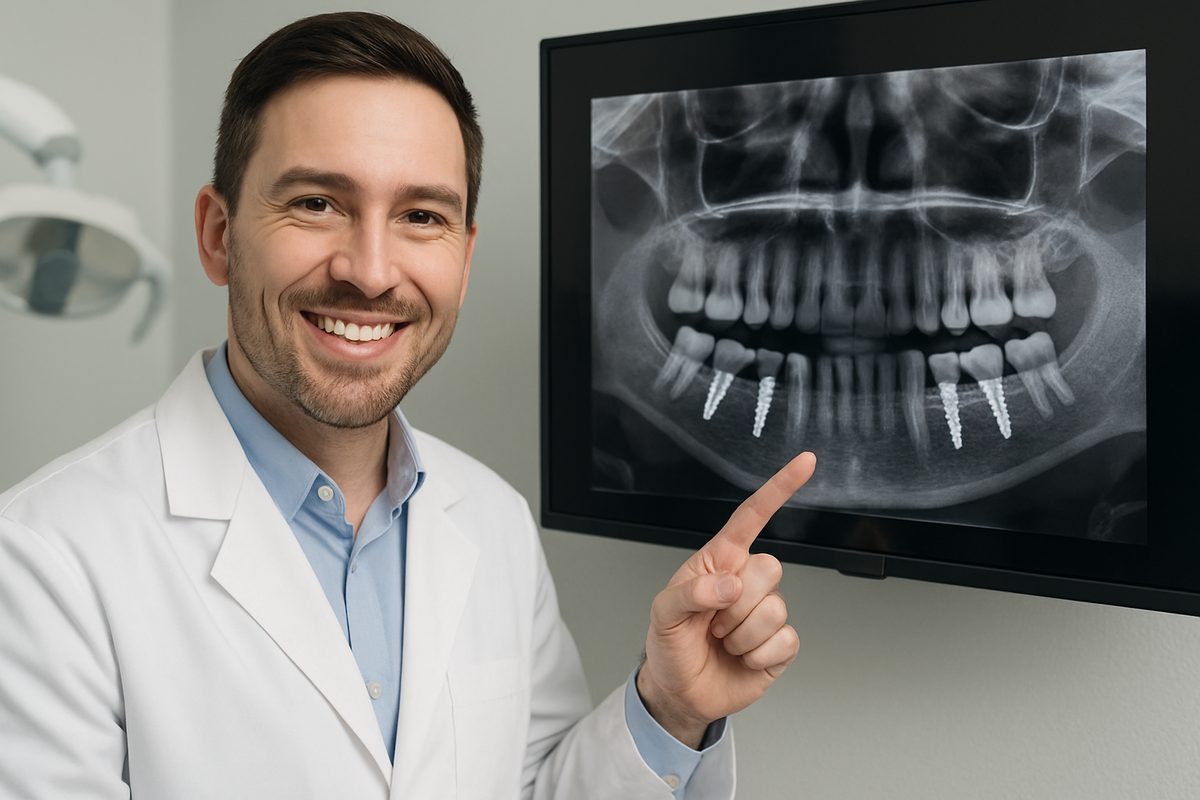
CBCT 3D imaging maps bone, nerves, and sinuses for precise planning. Intraoral scanners capture digital impressions for accurate prosthetic design and faster lab work. Soft tissue lasers help shape and heal gum tissue around implants. Zirconia restorations provide precise, esthetic final teeth. An in-house dental lab shortens turnaround time and gives tighter quality control of the final prosthesis.
Treatment stages and timeline
Typical steps: extractions of failing teeth, bone grafting if needed, implant placement, healing/osseointegration, and final prosthetic delivery. If bone grafts are required, healing can add months. Immediate-load protocols allow temporary teeth the same day in some cases, but final prosthetics are delivered after full healing—often 3–6 months. Delayed protocols place implants and wait for osseointegration before attaching a prosthesis.
Risks, benefits, and recovery
Main benefits include restored chewing and speech, improved appearance and confidence, and long-term durability compared with dentures. Implants preserve jawbone and avoid the limitations of removable prostheses. Risks include infection, implant failure or loosening, nerve irritation, sinus complications for upper implants, and complications with grafts. Watch for increasing pain, swelling that worsens after a few days, fever, or loose implants—contact your provider if these occur. Recovery tips: follow a soft-food diet initially, avoid smoking, take medications as directed, maintain clean surgical sites, and attend follow-up visits.
Cost factors and payment options for full mouth dental implants aurora il
Cost drivers include the number of implants, need for bone grafts or sinus lifts, prosthetic materials (zirconia vs acrylic), lab work, and clinician experience. Insurance often covers limited portions—extractions or emergency care—but rarely pays for full implant prostheses. Common payment options include in-office financing, third-party medical/dental financing plans, and phased treatment to spread cost. Ask about estimates that separate surgical and prosthetic fees.
Why choose Grand Dental Implant Centers for full mouth dental implants aurora il
Grand Dental Implant Centers focuses on implant care with experienced clinicians like Dr. Cole Wells and Dr. Brandon Bice at the Aurora location. The practice uses CBCT 3D imaging, intraoral scanners, soft tissue lasers, and an in-house dental lab to control quality and speed delivery. They offer zirconia restorations and IV sedation for comfort. This implant-focused approach aims to improve outcomes, efficiency, and patient comfort.
Questions to ask at your consultation
– How many full-arch cases have you completed? What are your success rates? – Will you use CBCT imaging and digital planning for my case? – Do you recommend All-on-4, All-on-6, overdentures, or zirconia hybrids for me—and why? – Will I receive temporary teeth the same day? – What sedation options are available and who administers IV sedation? – What are the full costs and what is included in the estimate? – What warranty, follow-up care, or maintenance is provided?
Next steps / short CTA
Prepare for a consult by gathering medical history, a list of medications, and photos of your smile if possible. At your first visit expect a thorough exam, CBCT imaging, and a clear, written plan with timeline and costs. If you’re ready to learn whether full mouth dental implants aurora il is right for you, schedule a consultation to get a personalized treatment plan and financing options.