Implant dentistry definition can feel technical, but it simply describes the branch of dentistry that replaces missing teeth with artificial roots and crowns that look, feel, and function like natural teeth. This post will explain the implant dentistry definition Aurora, IL patients often search for, cover types of implants, who makes a good candidate, the step-by-step process, benefits and risks, and how modern technology improves outcomes. By the end you’ll know what to expect and how to take the next step toward a long-lasting smile.
Implant Dentistry Definition: What Is a Dental Implant?
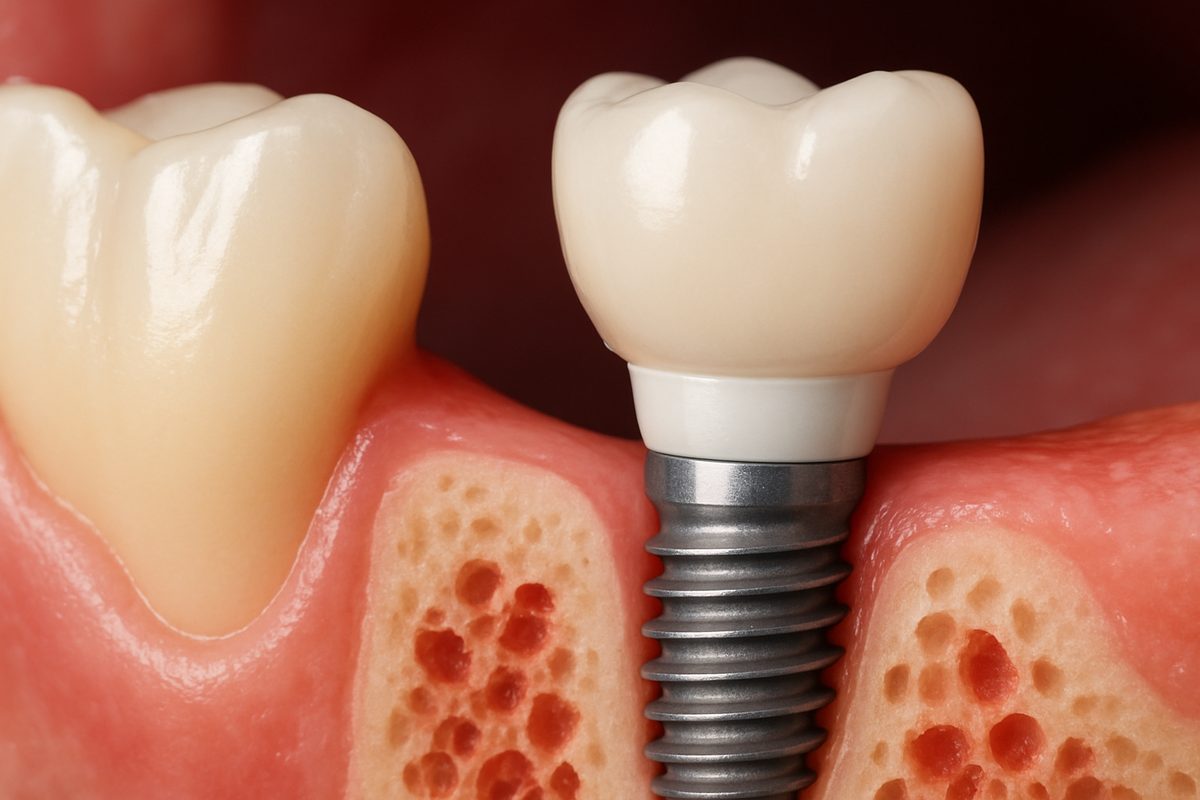
A clear implant dentistry definition is: a dental implant is an artificial tooth root, usually made of titanium or zirconia, placed into the jawbone to hold a replacement tooth or bridge. The three basic parts are the implant (root), the abutment (connector), and the crown or prosthesis (the visible tooth). Unlike bridges that rely on neighboring teeth or removable dentures that sit on gums, implants fuse to bone and act more like a natural tooth root. Searchers asking about implant dentistry definition Aurora, IL often want to know how implants compare to dentures and bridges — implants preserve bone and give stronger chewing power.
Common Types of Dental Implants and Restorations
Single-tooth implants
Single-tooth implants replace one missing tooth with one implant and a crown. These are ideal when the adjacent teeth are healthy and you want a long-term, natural-feeling solution. The goal is to restore appearance, chewing function, and stop bone loss in that spot.
Multiple implants and implant bridges
When several teeth in a row are missing, two or more implants can support a bridge. Implant bridges are fixed in the mouth and don’t rely on surrounding teeth for support. They feel more stable than removable partials and protect adjacent teeth from extra wear.
Full-arch solutions (All-on-4 / full-mouth)
Full-arch options use multiple implants to support a fixed set of teeth for a whole upper or lower jaw. All-on-4 is a common method that uses four strategically placed implants to hold a full arch. These solutions are recommended for people who have lost most or all teeth and want a fixed, strong, and durable prosthesis.
Who Is a Good Candidate?
Oral health and bone requirements
Good candidates have healthy gums and enough jawbone to support an implant. If bone has shrunk after tooth loss, procedures like bone grafts or sinus lifts can rebuild volume so an implant can be placed. Gum disease must be treated before implant surgery to reduce the risk of complications.
Medical conditions and lifestyle factors
Certain conditions and habits affect candidacy. Well-controlled diabetes usually isn’t a barrier, but uncontrolled diabetes can slow healing. Smoking raises the risk of implant failure; quitting improves success rates. Some medications and medical therapies may also influence healing — your doctor and dentist will review your health history.
The Implant Treatment Process: Step by Step
Consultation and diagnosis
The process starts with an exam, medical history review, and imaging like 3D CBCT scans. This planning stage maps bone, nerves, and sinuses and helps the team choose implant size and position. A clear plan reduces surprises during surgery.
Surgery and placement
Implant placement is a minor oral surgery. Options for comfort include local anesthesia, nitrous oxide, or IV sedation. The implant is placed into the bone, then the area is sutured. Many patients go home the same day with post-op instructions and medication for pain control.
Healing and final restoration
Osseointegration is the healing process where bone bonds to the implant. This typically takes a few months. Temporary teeth may be used while healing occurs. Once stable, the abutment and final crown, bridge, or denture are attached for a finished look and function.
Benefits and Risks of Implants
Key benefits
Implants restore chewing and speech, protect remaining bone from resorption, and offer durability that often lasts many years. They look natural and avoid altering adjacent teeth, unlike some bridgework.
Common risks and how they’re managed
Risks include infection, nerve injury, sinus problems, and implant failure. Skilled planning with 3D imaging, proper surgical technique, and good oral hygiene reduce these risks. Prompt follow-up care and treating gum disease are essential to long-term success.
How Modern Technology Improves Implant Care
Advanced tools make implant treatment more accurate and comfortable. CBCT 3D imaging provides a precise view of bone and anatomy. Intraoral scanners speed digital impressions and improve fit. Soft-tissue lasers reduce gum inflammation. Zirconia restorations offer strong, tooth-like esthetics. In-house labs let teams control quality and shorten turnaround time. These technologies together improve outcomes and reduce surprises.
Why Choose Grand Dental Implant Centers
Grand Dental Implant Centers has focused implant care since 1987 and serves multiple Illinois locations. The practice offers full-mouth implant options, IV sedation for comfort, financing to help with costs, and in-house labs to manage quality. Their start-to-finish approach emphasizes modern imaging and materials to help patients get durable, natural-looking results.
Meet the Doctors Who Place Implants
Dr. Cole Wells — Implant Specialist
Dr. Cole Wells is a partner and lead clinician in Aurora, IL, trained at Midwestern University with advanced education in complex implant and restorative procedures and memberships in ADA and ISDS.
Dr. Brandon Bice — General Dentist & Implant Specialist
Dr. Brandon Bice practices in Aurora, IL, with training from Midwestern University and continuing education in full-arch treatments, restorative care, and implant surgery.
Common Questions Answered About Implant Dentistry Definition (FAQ)
How much do implants cost?
Costs vary widely by type of restoration, need for grafting, materials, and location. Single implants may be less costly than full-arch solutions. Many practices offer financing to spread payments.
Does getting an implant hurt?
Most patients report little pain during the procedure thanks to anesthesia and sedation options. Some soreness after surgery is normal and managed with meds and rest.
How long do implants last?
With good care, implants can last decades. The crown may need replacement over time, but the implant itself can be a lifetime solution if gum health and hygiene are maintained.
Will my insurance cover implants?
Coverage varies by plan. Many dental plans offer partial coverage; medical plans sometimes help if tooth loss is related to medical treatment. Check your benefits and plan for out-of-pocket costs.
Next Steps: Considering Implants
If you’re ready to learn more, schedule a consultation and bring a list of medications and any recent dental records. Ask for a 3D imaging evaluation to get a personalized plan and cost estimate. A focused implant team can answer questions, review sedation and financing options, and help you decide if implants are the right solution for your smile.