
You take your teeth out at night, drop them in a glass and wonder if this is how it has to be. If you’ve ever thought, “I have false teeth, and I’m tired of them,” you’re not alone, and dental implants might be the change you’ve been looking for.
Many people who say “I have false teeth” are switching to dental implants for teeth that feel sturdier and more natural. This guide covers the options for replacing false teeth with dental implants, so you can decide what fits your life and your oral health.
How Dental Implants Work
Dental implants replace the roots of missing teeth with metal, screw-like posts placed in the jawbone. They give you a strong base for fixed or removable replacement teeth that are made to match your natural smile. Implants also help prevent bone loss in the jaw and keep your face from taking on a sunken look.
That bone piece matters more than most people realize. Dentures sit on the gums, so the bone underneath slowly shrinks over the years. That’s often why a denture that fit well at first starts slipping later.
Why People Replace False Teeth
False teeth help, but they come with challenges. Many people deal with sore spots, trouble eating certain foods, or changes in how they speak.
You might know the feeling: avoiding corn on the cob, worrying about a denture slipping when you laugh or cough, or keeping adhesive in your bag just in case. Implants give you teeth that look, feel, and work more like natural ones, which brings more confidence to everyday life.
Dental Implant Options for Replacing False Teeth
Single Implants for One or Two Teeth
If you’re missing one or two teeth, single implants are a targeted solution. Each implant holds its own crown, which blends in with your other teeth.
Implant Bridges
If several teeth in a row are missing, an implant bridge can support them with just a few implants, without relying on your natural teeth for support.
Implant-Supported Dentures for a Secure Fit
Implant-supported dentures attach to implants for extra stability, so they fit much more securely than traditional dentures. Many people find they can eat more of their favorite foods again.
Same-Day Full-Mouth Implants
Imagine walking in with false teeth and leaving with a full new smile. That’s what same-day full-mouth implants are designed for. A full arch is supported by at least four implants, and in many cases, temporary teeth can be placed the same day as surgery.
What to Expect From the Dental Implant Process
Your Pre-Procedure Evaluation
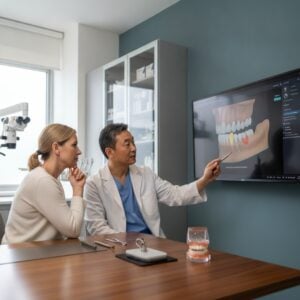
Every implant journey starts with a thorough evaluation, including CBCT 3D scans, to check your bone health and plan the right approach for your implants.
The Surgical Process
During surgery, the implants are placed precisely in your jawbone, where they act as new roots for your replacement teeth. IV sedation is available if you’d like to be more relaxed.
Recovery and Aftercare
After the procedure, good home care and regular dental checkups help your implants heal well and last. Soft foods, gentle cleaning, and following your post-op instructions make the first weeks easier.
Comparing Dental Implant Alternatives
How Traditional Dentures Compare
Traditional dentures cost less up front, but they often lack the comfort and security of implants, and many people rely on adhesives to keep them in place.
Traditional Bridges
A traditional bridge requires reshaping the healthy teeth on either side of the gap. Implants can be a less invasive, longer-lasting option.
When you compare dental implant alternatives, think about comfort, how well you can chew, and your long-term oral health. The right answer depends on your mouth, your budget, and your goals.
How Advanced Technology Helps With Dental Implants
Modern implant treatment uses advanced materials and planning tools, including zirconia restorations, which are known for their strength and natural appearance. Digital planning with 3D scans helps place each implant where it will support your new teeth best.
Patient Comfort and Care
Your comfort matters throughout treatment at Grand Dental Implant Centers. Options like IV sedation, given by board-certified anesthesiologists, help you feel relaxed and at ease during your implant procedure.
FAQs About I Have False Teeth
How long does the procedure take?
The full process usually takes several months, from your first evaluation to complete healing, though many patients get temporary teeth much sooner.
Are implants painful?
Local anesthesia and sedation keep you comfortable during the procedure. Some soreness afterward is normal and usually manageable with medication.
What is the cost difference compared to alternatives?
Implants cost more up front, but many people find them cost-effective over time because they’re durable and don’t need frequent replacement like dentures.
Can I switch from dentures to implants?
Yes. Many patients move from traditional dentures to implants and find it makes daily life much easier.
Life Without Worrying About Your Teeth
Picture eating dinner with friends, laughing without covering your mouth, and going to bed without taking your teeth out. For many people, that’s the moment they realize how much they’ve been living around their dentures.
If you’re ready for teeth that feel and work more like your own, dental implants might be your answer. Contact Grand Dental Implant Centers to schedule a consultation at one of our locations across Chicagoland and Illinois, and let’s talk about your options if you’re thinking, “I have false teeth, and I want something better.”