A tooth implant is an artificial tooth root placed into your jaw to hold a replacement tooth or bridge. In plain terms, a tooth implant replaces the missing root and tooth so you can chew, speak, and smile like before. This short guide explains what is a tooth implant, who might need one, the step-by-step process, benefits and risks, modern technology that improves outcomes, and how Grand Dental Implant Centers can help if you’re considering implants.
What Is a Tooth Implant?
Parts of an implant
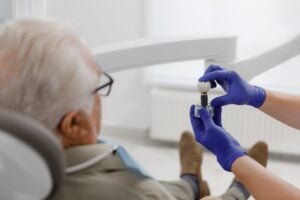
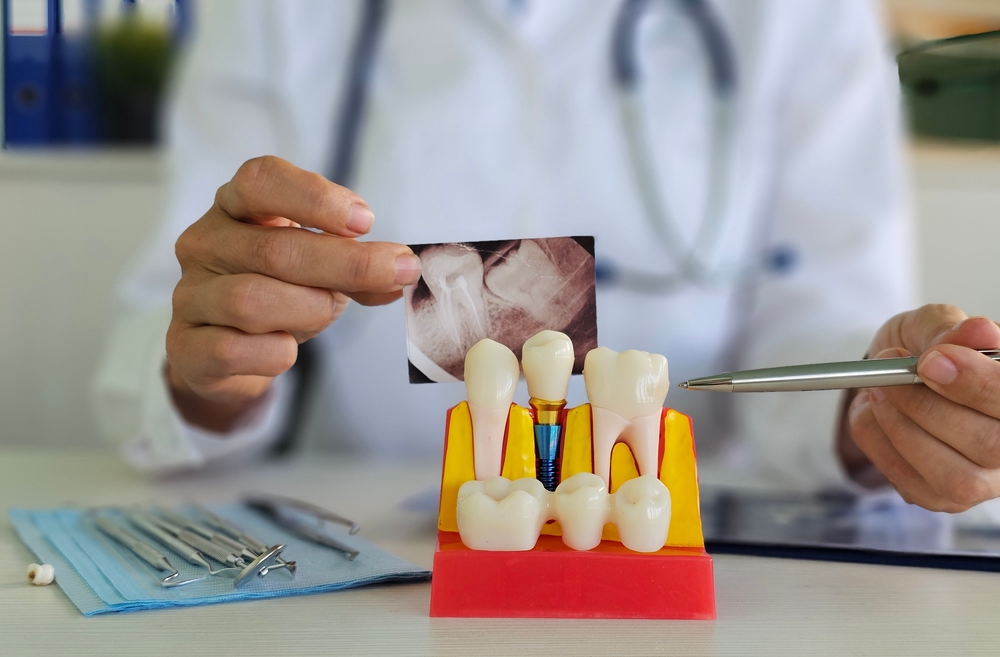
A typical tooth implant has three parts: the implant screw (the root), the abutment (the connector), and the crown (the visible tooth). The implant screw is a small titanium post placed into the jawbone. The abutment attaches to the screw and holds the crown. The crown is custom-made to match your teeth. Together they act like a natural tooth: the screw keeps the root stable, the abutment connects parts, and the crown restores appearance and function.
How implants differ from bridges and dentures
Unlike bridges and removable dentures, implants fuse to the bone (osseointegration) and act as permanent roots. Bridges rely on neighboring teeth for support and can require grinding down healthy teeth. Dentures sit on the gums and can slip or cause bone loss over time. Implants preserve bone, feel more natural, and usually last longer than other options.
Who Is a Good Candidate for a Tooth Implant?
Common candidates
Good candidates include people missing one tooth, several teeth, or needing full-arch replacement. Candidates should be in generally good health, have healthy gums, and sufficient jawbone to support the implant. Even if bone is thin, grafting can often rebuild it so implants become possible.
When implants may not be right
Implants aren’t ideal for heavy smokers, people with uncontrolled diabetes, or those with certain immune or bone conditions. Severe bone loss may limit options without grafts. In these cases, a dentist may recommend bridges or dentures instead.
The Tooth Implant Process: Step-by-Step
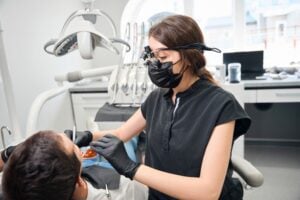
Consultation and planning
Your dentist reviews your health, takes x-rays or a cone-beam CT (CBCT) scan, and creates a treatment plan. CBCT gives a 3D view of bone and nerves for precise planning.
Placement and healing
The implant screw is surgically placed in the jaw. Over weeks to months the bone grows around the implant (osseointegration). You may have a temporary tooth while healing.
Abutment and final restoration
After healing, an abutment is attached and a custom crown or prosthesis is placed. Final adjustments ensure fit, bite, and appearance are right.
Benefits and Risks of Tooth Implants
Main benefits
Implants improve chewing, speech, and appearance. They preserve jawbone and neighboring teeth and can last many years with proper care.
Potential risks and how they’re lowered
Risks include infection, implant failure, or peri-implantitis (gum inflammation). Good planning with CBCT, clean surgical technique, proper oral hygiene, and regular follow-up reduce these risks.
Modern Technology That Improves Implant Outcomes
Cone-beam CT (CBCT)
3D imaging helps dentists plan implant size and position while avoiding nerves and sinuses.
Intraoral scanners & digital workflows
Digital impressions speed up fabrication and increase accuracy for better-fitting crowns.
Soft tissue lasers, zirconia restorations, and in-house labs
Lasers help manage gums, zirconia crowns offer strong, natural-looking results, and on-site labs shorten turnaround and improve quality control.
Why Choose Grand Dental Implant Centers for Tooth Implants?
Grand Dental Implant Centers has focused implant care since 1987 with implant specialists like Dr. Cole Wells and Dr. Brandon Bice. Their Illinois locations use CBCT, intraoral scanning, soft tissue lasers, zirconia restorations, and in-house labs to streamline care. They offer full-mouth solutions, IV sedation, and financing to make treatment comfortable and manageable.
How to Learn More or Book a Consultation
At a consult expect an exam, CBCT imaging if needed, and a clear treatment plan with costs and timing. Bring medical history and any dental records. Ask about sedation and financing options. To schedule a consultation, contact Grand Dental Implant Centers to discuss whether a tooth implant is right for you.